


Why Wireframes are a Web Developer's Best Friend (and Clients Love Them Too!)
—When it comes to web design, the spotlight often shines on beautiful UIs, engaging content, and innovative features. But before the pixels are polished and the code is deployed, there's a crucial, often unsung hero that acts as the backbone of a successful project: the wireframe.
For many clients, a wireframe might seem like a simplistic, almost child-like drawing. "Where are the colours? The images? The fancy animations?" they might ask. But for us as web developers, a well-crafted wireframe is a roadmap, a blueprint, and a communication powerhouse all rolled into one. It’s the point where ideas solidify into tangible structure, and the real work can begin.
Beyond the Aesthetics: What a Wireframe Really Is
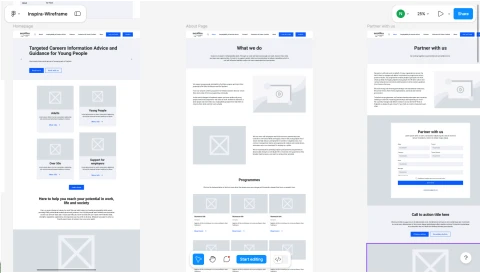
Think of a wireframe as the architectural drawing for your website. It’s a low-fidelity, monochrome visual representation of the page layout, focusing solely on:
- Content Hierarchy: What’s the most important information? How is it organised?
- User Flow: How will users navigate through the site? Where do they go next?
- Functionality: What interactive elements are present (buttons, forms, navigation)?
Information Architecture: Where does specific content live on the page?
In essence, it strips away all the visual distractions to reveal the raw functionality and structure of your site. This is where the journeys through pages and the overall user experience (UX) gets decided and locked in.
A Developer’s Secret Weapon
While often seen as a design step, wireframes are invaluable for web developers. Here’s why:
- Clarity on Scope and Requirements: Before a single line of code is written, a wireframe provides crystal clear expectations. Developers can see exactly what elements need to be built, where they will reside, and how they should function. This significantly reduces assumptions and misinterpretations.
- Early Identification of Technical Challenges: Looking at a wireframe, a developer can immediately identify potential technical hurdles. "How will this complex navigation work responsively?" or "Is this data structure feasible for the proposed content?" Catching these issues early saves countless hours (and headaches) down the line.
- Efficient Development Planning: With a clear layout, developers can better estimate development time, allocate resources, and even begin to think about the underlying code architecture. It allows for a more organised and efficient workflow.
- Foundation for Responsive Design: Wireframes force consideration of how content and elements will adapt to different screen sizes. This "mobile-first" or "content-out" approach is crucial for modern web development, and wireframes provide the perfect canvas for it.
- Reduced Rework and Iterations: Imagine building an entire feature only to find out the client wanted a completely different layout. Wireframes allow for rapid iterations and changes at a stage where they are incredibly inexpensive and easy to implement. Changing a box on a drawing is a lot faster than refactoring an entire component.
Peace of Mind and Clarity for Clients
Clients might initially be hesitant about wireframes, but once they understand their purpose, they become huge advocates:
- Shared Understanding: Wireframes create a common language between the client and the development team. Everyone is literally on the same page regarding the site’s structure and functionality.
- Focus on Function, Not Aesthetics (Yet!): By removing visual distractions, clients are encouraged to focus on the user experience and content flow. This ensures the site’s core purpose is met before getting bogged down in colour palettes and if a box should have rounded corners or skewed borders.
- Cost-Effective Changes: Amending a layout or navigation flow in a wireframe typically takes around 30 minutes. Attempting that same change during development can easily take 4 hours. By identifying these needs early, we ensure the budget is spent on building features, not fixing avoidable mistakes.
- Reduced Risk and Anxiety: Seeing a visual representation of their future website, even a simple one, helps alleviate client anxiety. They can visualise the end product and provide feedback proactively.
From Wireframe to Reality
The journey from a simple wireframe to a fully functional website is a fascinating one. It’s a testament to how foundational planning can pave the way for complex, beautiful, and user-friendly digital experiences.
So, the next time you're embarking on a web project, don't underestimate the power of the humble wireframe. For both developers and clients, it’s not just a drawing – it’s the bedrock of success.
We specialise in building websites with a solid foundation. Contact us today to discuss how our structured design process can bring your vision to life.
Book a Discovery Call
